
Programs
Keynote Speakers
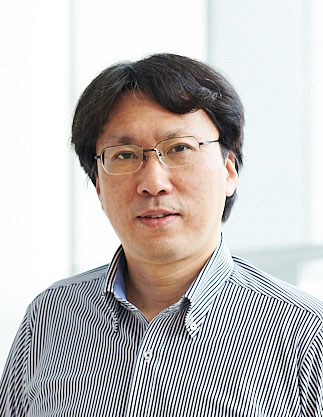
Prof. Dr. Naoyuki Kubota
Tokyo Metropolitan University, Japan
Multi-scopic Topological Intelligence in Cyber-Physical-Social Systems
Abstract:
Recently, the original concept of cyber-physical systems (CPS) has often been extended as cyber-physical-X systems, which clearly combine the X factor with CPS when the X factor cannot be directly measured in physical systems, or when X represents an established research field or a target domain. Cyber-physical-social systems (CPSS) is discussed as a means of realizing a human-centered society through the integration of information, intelligence, communication, and robot technologies. Essentially, we require a multi-scopic approach to simulate and analyze interactions within these three domains because we must address qualitatively distinct large datasets simultaneously. For example, we can discuss a phenomenon from three different levels of macro-, meso-, and micro- scopic simulations. Microscopic simulations allow us to study the physical dynamics of human neuronal and musculoskeletal systems. Macroscopic simulations allow us to study the social dynamics of qualitative spatiotemporal relationships and interactions between humans in a community or society level. Furthermore, a mesoscopic simulation can be based on bottom-up construction from the microscopic level and a top-down constraint from the macroscopic level. Topological intelligence has been used to deal with topological features and structures for the inference, prediction, search, and learning in the multi-scopic and multi-scale simulations in CPSS. In this talk, I discuss the importance of multi-scopic topological intelligence in CPSS. First, I introduce various types of topological mapping methods, unsupervised learning methods, and graph-based methods. Next, we show how to apply these methods to the multi-scopic simulations and analyses in CPSS. For example, I show several experimental results of physical and cognitive exercises in trailer living labs. Finally, I discuss the future direction of the topological intelligence in CPSS.
Keywords: Topological Intelligence, Cyber-physical Systems, Machin Learning, Multi-scopic Approach
Biography:
Naoyuki Kubota is currently a professor in the Department of Mechanical Systems Engineering, the Graduate School of Systems Design, and director of the Community-centric Systems Research Center, Tokyo Metropolitan University, Japan. He is the representative director of the Tokyo Biomarker Innovation Research Association, Japan. He received his Ph.D. degree from Nagoya University, Japan, in 1997. He was a Visiting Professor at University of Portsmouth, UK, Seoul National University, and others. His current interests are in the areas of topological intelligence, coevolutionary computation, spiking neural networks, robot partners, and informationally structured space. He has published more than 600 peer-reviewed journal and conference papers in the above research areas. He received the Best Paper Award of IEEE IECON 1996, IEEE CIRA 1997, and so on. He was an associate editor of the IEEE Transactions on Fuzzy Systems from 1999 to 2010, Editorial Board Member of Journal of Advanced Computational Intelligence and Intelligent Informatics since 2004, the IEEE CIS Intelligent Systems Applications Technical Committee, Robotics Task Force Chair from 2007 to 2014, Editor of ROBOMECH Journal since 2012, IEEE Systems, Man, and Cybernetics Society, Japan Chapter Chair from 2018 to 2021, IEEE Transactions on Affective Computing Steering Committee Member since 2019, and others.

Prof. Iwan Syarif, Ph.D.
Politeknik Elektronika Negeri Surabaya, Indonesia
From Data to Defense: The Strategic Role of AI in Modern Cybersecurity
Abstract:
The rapid growth of digital systems has transformed cybersecurity into a data-intensive discipline, where the ability to extract actionable insights from vast and complex datasets is critical. This keynote explores the strategic role of Artificial Intelligence (AI) in modern cybersecurity, emphasizing the transition “from data to defense.” By integrating AI and data mining techniques, organizations can move beyond traditional reactive security models toward proactive and predictive defense mechanisms.
The talk highlights how machine learning and advanced analytics enable real-time threat detection, anomaly identification, and intelligent response to cyber incidents. It also discusses the application of AI in critical domains such as fraud detection, network intrusion detection, and healthcare data security. Special attention is given to the challenges of implementing AI-driven cybersecurity, including data quality, model interpretability, adversarial attacks, and ethical considerations.
Furthermore, this keynote presents a strategic framework for leveraging AI to enhance cyber resilience, combining data-driven intelligence with adaptive security architectures. Emerging trends such as autonomous defense systems, explainable AI, and the integration of AI with edge and cloud computing are also examined.
By bridging the gap between raw data and actionable defense, AI has the potential to redefine how organizations anticipate, detect, and respond to evolving cyber threats. This session aims to provide both theoretical insights and practical perspectives for researchers, practitioners, and policymakers seeking to strengthen cybersecurity in the era of intelligent systems.
Keywords: AI, cyber security, data mining, threat detection
Biography:
Prof. Iwan Syarif, PhD is a distinguished academic and researcher in the field of computer science, with a strong focus on data science, artificial intelligence, and cybersecurity. He is currently a professor at Politeknik Elektronika Negeri Surabaya (PENS), Indonesia, where he has made significant contributions to teaching, research, and academic leadership.
He completed his Bachelor’s and Master’s degrees in Informatics at Institut Teknologi Sepuluh Nopember (ITS), Indonesia. He then pursued an additional Master’s degree in Artificial Intelligence at the University of Southampton, United Kingdom, followed by a PhD in Computer Science from School of Electronics and Computer Science (ECS), the University of Southampton. His academic training has shaped his expertise in machine learning, intelligent systems, and advanced data analytics.
Prof. Iwan also holds professional certifications from EC-Council, including Certified Ethical Hacker (CEH) and Certified Network Defender (CND), demonstrating his strong practical expertise in cybersecurity.
He has published numerous papers in reputable international journals and conferences, particularly in areas such as data mining, fraud detection, anomaly detection, and AI applications in healthcare and cybersecurity. As a frequent speaker at international conferences, he shares insights on emerging technologies and their impact.

Prof. Toru Nakanishi
Hiroshima University, Japan
Privacy-Preserving Decentralized Authentication for Self-Sovereign Identity
Abstract:
In recent years, self-sovereign identity (SSI) has attracted increasing attention as a new paradigm for digital identity management beyond centralized identity providers. In SSI, multiple issuers can provide credentials on users’ attributes and qualifications, while users themselves hold, manage, and present such credentials when needed. Moreover, distributed ledger technologies such as blockchain offer a basis for authentication infrastructures that reduce reliance on any single trusted authority. At the same time, privacy preservation is a fundamental requirement in SSI, motivating cryptographic techniques that enable authentication with minimal disclosure of personal information. In this context, Verifiable Credentials (VCs) have emerged as a key technology for representing and presenting users’ attributes and qualifications. Linked Data based VCs extend this framework by enabling richer graph-structured representations of relationships among credentials and attributes. An important challenge in such systems is selective disclosure, namely, how to reveal only the necessary parts of a credential while hiding the rest. This talk reviews the foundations of VCs and privacy-preserving authentication, and discusses approaches to constructing Linked Data based VCs with selective disclosure. It then discusses the limitations and trust assumptions of conventional issuer-signature-based credential systems, and presents alternative directions toward more flexible and decentralized credential management, where credentials are maintained on public ledgers or blockchains and users can prove certified attributes while preserving privacy.
Keywords: Self-Sovereign Identity, Verifiable Credentials, Selective Disclosure, Privacy-Preserving Authentication, Decentralized Credentials
Biography:
Toru Nakanishi received the M.S. and Ph.D. degrees in information and computer sciences from Osaka University, Japan, in 1995 and 2000 respectively. He joined the Department of Information Technology at Okayama University, Japan, as a research associate in 1998, and moved to the Department of Communication Network Engineering in 2000, where he became an assistant professor and an associate professor in 2003 and 2006 respectively. In 2014, he moved to the Department of Information Engineering at Hiroshima University, Japan, as a professor. His research interests include cryptography and information security (privacy-enhancing authentications).
Further information: https://home.hiroshima-u.ac.jp/t-nakanishi/index.html
Tracks
IES-ETA
International electronics Symposium on Engineering Technology and Applications
Join us in International Electronics Symposium on Engineering Technology and Applications (IES-ETA) 2026. The symposium is focusing on practical application of science and engineering to a wide range of real world problems, delivering the engineering technology from laboratory to marketplace. IES-ETA 2026 brings technology and business leaders, experts from academia, and government together to materialise the ideas. On behalf of our symposium organizers we warmly invite you to submit your full paper and participate in this exciting international event
Topics of Interest
Power engineering and Energy Technology
- Power Quality and Electromagnetic Compatibility
- High Voltage Engineering and Insulation Technology
- Power Generation Technology
- Power System Dynamic, Stability and Control
- Power System Protection, Reliability and Security
- Electric Power Transmissions and Distributions
- Power Electronic Converter Topologies, Design and Control
- Switch-Mode Power Supplies and UPS
- Electric Drives and Electrical Machines
- Renewable Energy and Smart Grid Technology
- Energy Storage System and Technology
Telecommunication Engineering Technology
- Electromagnetic Compatibility
- Electromagnetic and Radio Propagation
- Wireless and Mobile Communications
- Telecommunication, Propagation and Networking
- Computational Electromagnetics and Electromagnetics Simulation Technology
- DSP real-time encoding technology and signal Embedded Systems
Electronics Systems and Electrics Technology
- Biomedical Engineering
- Microelectronic Circuits and Systems
- Measurement and Instrumentations
- Nano Technology
- Micro-Electro-Mechanical System
- Sensor, RFID, and Electronic Design
- Material and Device
- Vehicular technology
Robotics Technology and Control Systems
- Robotic Vision
- Intelligent Robotics
- New Mechanism and Mobility
- Networked/Ubiquitous Robotics
- Disaster Robotics
- Humanoid Robot
- Service Robotics
- Nano/Micro Robotics
- Surgery Robot
IES-KCIC
International Electronics Symposium on Knowledge Creation and Intelligent Computing
Knowledge creation is becoming more important topic for researchers and users in academic, management and industrial fields. The term has been widely used for the last couple of years, and refers to the formation of new ideas through interactions between explicit and tacit knowledge in individual human mind. To realise knowledge creation in real life, it is essential to transform human mind into computation in order to extract potentially useful information from data and create valuable knowledge. The use of intelligent techniques in computing-related fields can be useful to retrieve meaningful result in automated processes for knowledge creation.
Post Conference:
Topics of Interest
Immersive Technology and Interactive Media
- Virtual engineering
- Digital twin technology
- Immersive digital experiences
- Pervasive game technology
- Gamification
- Audio and video technology
Knowledge Base and Engineering
- Information modelling
- Knowledge acquisition and accumulation
- Knowledge discovery
- Knowledge management
- Information systems and applications
- Human-computer interaction and Modelling
- Intelligent optimization
Intelligent Multimedia Systems
- Multimedia modelling
- Multimedia computing systems and applications
- Intelligent multimedia analysis and processing
- Web intelligence
- Web-based support systems
- Multimedia information retrievals
Computational Intelligence
- Learning and adaptation
- Perception and learning
- Emotion modellin
- Cognitive sciences
- Probabilistic and reasoning computation
- Reinforcement learning
- Statistical methods and data mining
- Pattern recognition
- Artificial intelligence and soft-computing
Applied-Computing Sciences
- ICT-based environmental studies and computations
- Social-based computing model and analysis
- Social media engineering
- E-Learning and educational computation
- Cross-cultural computation and modelling
- Disaster management computing and support systems
- Medical computing analysis and applications
- Robotics computing model and applications
- Intelligent text processing and Computational linguistics
- Linguistic knowledge modelling and representation
EXHIBITION
IES 2026 provides booths for companies and institutions to present and promote their ideas and innovative products. Sponsors with Gold and Silver levels will have the chance to show their innovative products in the booth. They may use the time to introduce or promote their business to the participants. For more details of this exhibition, please contact us.