
Workshop
Workshop on AI and Immersive Technologies for Intelligent Interactive Systems
Speakers
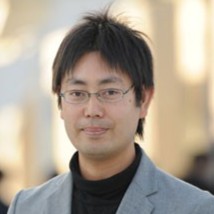
Prof. Kosuke Takano
Kanagawa Institute of Technology (KAIT), Japan
Biography:
Prof. Kosuke Takano is a Professor in the Department of Information and Computer Sciences at the Kanagawa Institute of Technology (KAIT), Japan. His research focuses on data science, multimedia information retrieval, web search and data mining, recommender systems, human–computer interaction, and database applications for education, commerce, and social networks. He has led numerous research projects in intelligent information systems, search technologies, and Generative AI, while fostering international collaborations across academia and industry. Through his research, Prof. Takano contributes to the advancement of intelligent information management and AI-driven technologies for next-generation digital society.

Assoc. Prof. Dr. Mohammad Alkhatib
University of Clermont Auvergne INP, France
Teaching Robots Human Skills: Towards Safe, Adaptive, and Intelligent Cyber-Physical Systems
Abstract:
The next generation of Cyber-Physical Systems requires intelligent machines that can learn, adapt, and interact safely with humans and the physical world. Rather than replacing human expertise, future intelligent systems should be capable of acquiring and enhancing human skills through effective collaboration between humans and machines.
This keynote explores human-centered artificial intelligence for adaptive robotic systems, focusing on learning from demonstration as a pathway for transferring human manipulation capabilities to robots. While traditional approaches mainly reproduce motion trajectories, many real-world tasks require robots to understand and regulate physical interactions, especially when manipulating deformable objects where forces, compliance, and environmental uncertainties play critical roles.
The presentation will discuss recent advances in compliant robot learning, including dual-quaternion-based movement representations and learning of synchronized motion-force behaviors. By combining geometric motion learning with adaptive wrench prediction, robots can generalize manipulation skills across different configurations while maintaining safe and compliant interaction with the environment.
Examples from real robotic applications, including deformable object manipulation and recycling-oriented tasks, will illustrate how AI-enabled cyber-physical systems can transform human expertise into intelligent robotic capabilities. The talk will conclude with future perspectives on safe human-robot collaboration, intelligent interactive systems, and the role of AI in building sustainable and human-centered technological ecosystems.
Keywords: Deformable object manipulation, Detachment task, Compliant Movement Primitives, Dynamic Movement Primitives
Biography:
Dr. Mohammad Alkhatib is an Associate Professor at Clermont Auvergne INP – Sigma Clermont and a member of the Institut Pascal (CNRS UMR 6602). He earned his PhD in 2020 from the University of Orléans, France, in medical robotics. He is a part of a research group on intelligent robotic systems and has supervised and supervising 3 postdoctoral researchers, 5 PhD students, and over 20 Master’s students. His research spans robotics, artificial intelligence, and computer vision, with applications in industry and medicine. Key interests include human–robot interaction, teleoperation, learning from demonstration, medical robotics, augmented reality, and cyber-physical systems.
Dr. Alkhatib’s work emphasizes human-centered everaging AI and robotics to create safe, collaborative environments that integrate human behavior with intelligent machines. This vision aligns with the IES 2026 theme of bringing advanced technologies into a human-centric, socially-aware technological ecosystem.
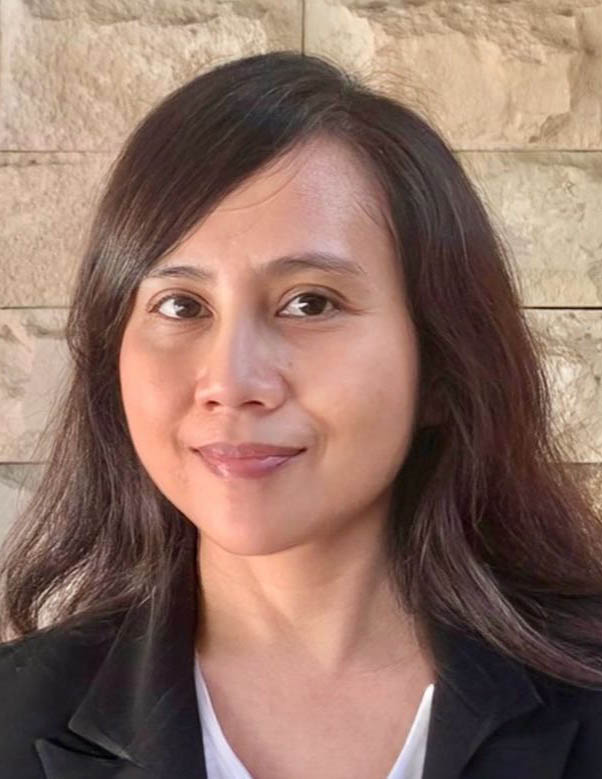
Dr.-Ing. Hestiasari Rante, S.T., M.Sc.
Politeknik Elektronika Negeri Surabaya, Indonesia
Beyond Immersion: Designing Intelligent Interaction in Spatial XR
Abstract:
Recent advances in Spatial Extended Reality (Spatial XR) have enabled highly immersive digital environments. However, immersion alone is not sufficient to create meaningful user experiences. The quality of interaction plays a central role in determining how users engage with immersive environments. This talk presents an interaction-centered approach to designing intelligent Spatial XR systems by integrating natural interaction techniques, including hand gestures, voice commands, and multisensory feedback. Rather than treating Artificial Intelligence (AI) as the primary objective, AI is positioned as an enabling technology that supports intuitive, responsive, and context-aware interaction. A projection-based Spatial XR environment developed for interactive climate change storytelling is presented as a case study to illustrate how interaction modalities are selected, coordinated, and synchronized to create seamless user experiences. The presentation discusses key design considerations, including interaction mapping, multimodal coordination, interaction transitions, user engagement, and system responsiveness. Finally, future opportunities for adaptive interaction, generative AI, and intelligent immersive environments are explored. The talk highlights that the future of Spatial XR depends not only on richer immersion, but also on the design of intelligent interactions that naturally connect users with digital environments.
Keywords: Artificial Intelligence, Interaction Design, Multimodal Interaction, Natural User Interfaces, Spatial XR
Biography:
Hestiasari Rante has been a lecturer at Politeknik Elektronika Negeri Surabaya (PENS), Indonesia, since 2008. She earned her Doctorate in Computer Science with a specialization in Digital Media in Education from the University of Bremen, Germany, and has been actively involved in research and teaching in the field of multimedia. As a Senior Member of IEEE, she collaborates with institutions in Indonesia and abroad to support research and innovation. Her work focuses on Human-Computer Interaction/Interaction Design and User Experience for Immersive Application. She also has a strong interest in cultural heritage research, exploring how immersive technology can be used to preserve and promote traditional arts and history. From 2024-2025, she was a Visiting Scholar at the University of Clermont Auvergne, France, where she continues to develop her studies in immersive media and interactive learning as applied to robotics. In addition to her research activities, she has served as a reviewer for journals, research grants, and scholarship programs since 2012.